Restrooms + Locker Rooms
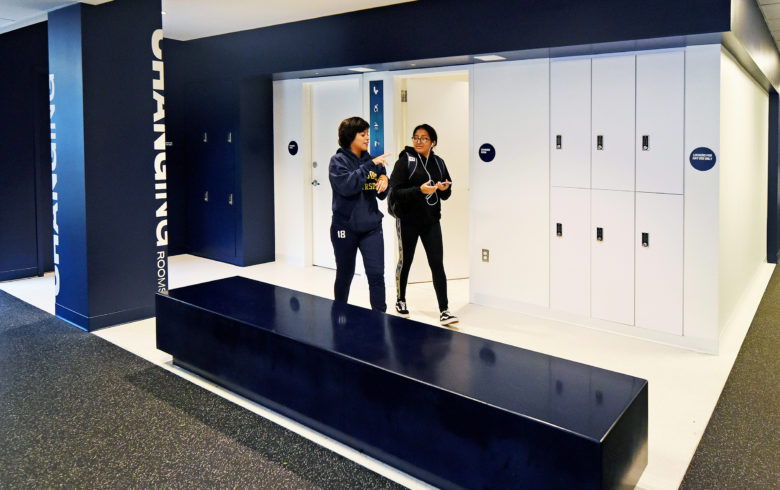
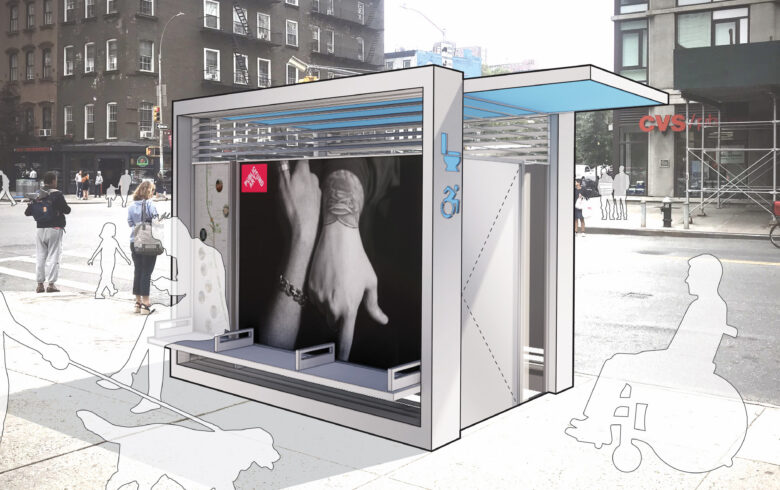
Launched in 2016, the Stalled! initiative develops restroom and locker room projects, prototypes, guidelines, and advocacy that improve the health and well-being of the wide range of people whose needs are not accommodated in traditional facilities today.
Partnering with Yale School of Public Health, we have developed strategies that allow us to design across identities—age, gender, disability, religion, culture, and neurodiversity—accommodating a wide range of users, including cis men and women, trans and nonbinary people, families, caregivers, people with chronic illnesses, and religious minorities. Our work also addresses “potty parity,” advancing equitable access to restrooms in public venues to reduce unequal wait times, especially for women.
Guidelines & Prototypes
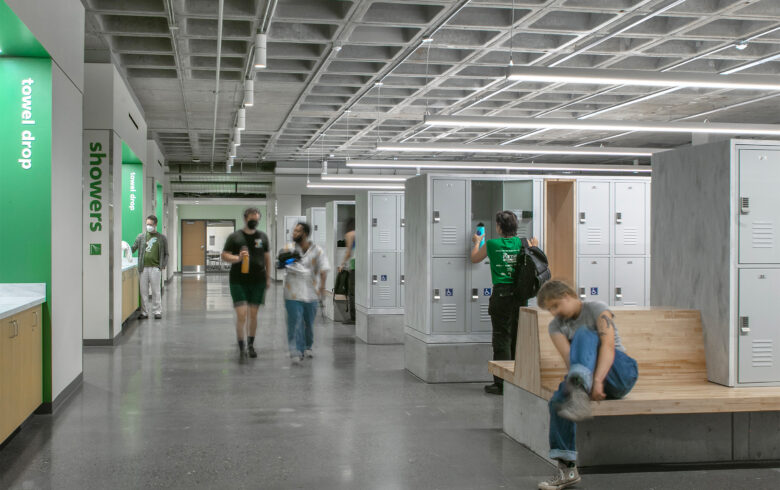
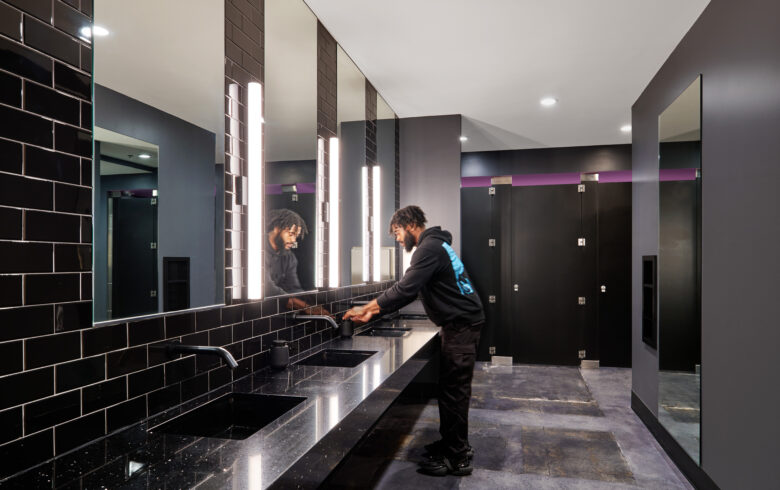
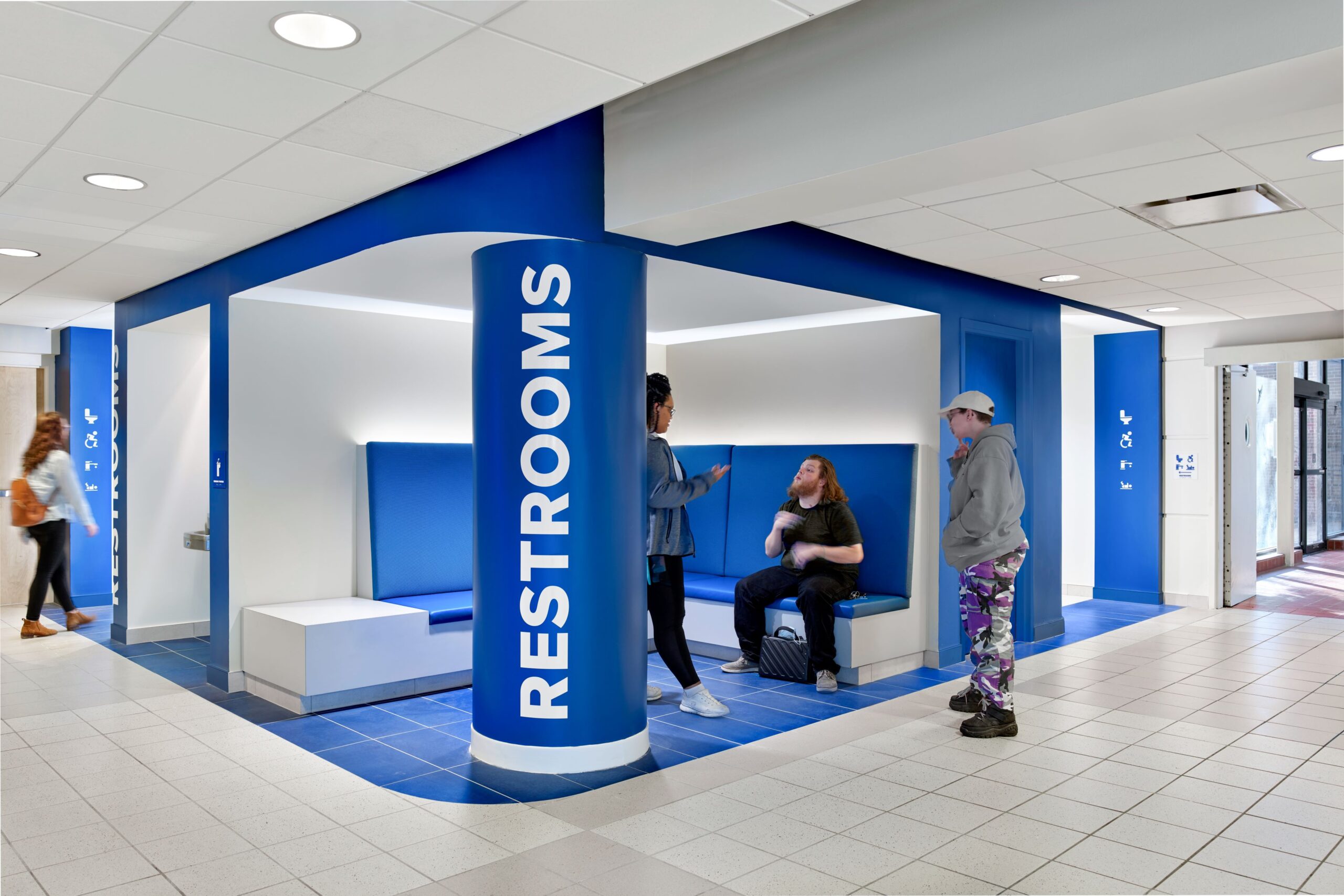
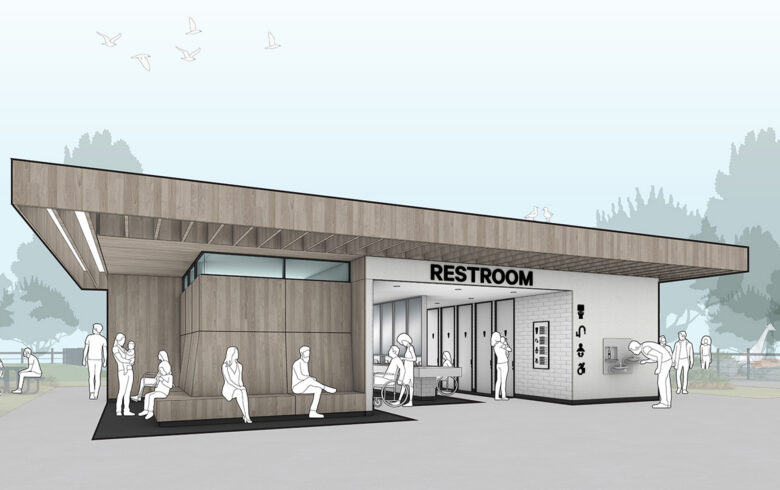
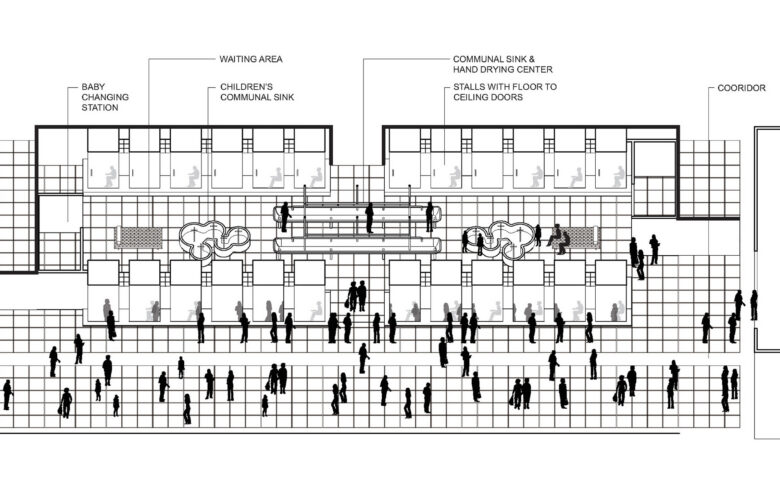
We have developed design guidelines for three restroom types: traditional men’s and women’s multi-user restrooms, single-user restrooms, and our human-centered all-user prototype—an open plan with floor-to-ceiling partitions, communal washing and grooming areas, and caregiving rooms. For all three, we provide detailed specifications, including counter heights, grab bars, and circulation clearances.
Guidelines & Distribution Plans
We work with institutions to assess existing restroom inventories and standards, and develop site-specific guidelines and distribution plans that mix all three restroom types across a building or campus, enabling users to choose the type that best meets their needs within a short walking distance.
Code Advocacy
We contribute to multiple initiatives to make all-user restrooms code-compliant nationwide, including partnerships with the AIA and the National Center for Transgender Equality to amend the 2021 IPC, and with AIANY’s LGBTQIA+ Alliance to amend New York State code.
Recognition
Since launching Stalled!, we have become leaders in inclusive restroom design, with over XXX,XXX website visits, hundreds of lectures and publications, awards from The Architect’s Newspaper, Architectural Record, and the AIA, grants from the AIA, NEA, and the Graham Foundation, and exhibitions at the Venice Biennale and Cooper Hewitt Smithsonian Design Museum.